



Dear Reader,
The festive season is coming to a close as I write this letter. I hope it brought you and your family some good time together.
Last month I admitted to sounding like a broken record when I say keep saving, stay invested, and let time do its work. A few of you came back to me with a good question. If the portfolio is best left alone, what can we actually do?
Quite a lot, as it turns out, but perhaps not with the portfolio.
The two halves of wealth
Wealth is built from two things; what you save, and how well it grows. Most of our attention goes to the second, like which fund, which asset class, what the market will do next. Far less attention goes to the first.
Yet the second half is the one nobody can control. No investor decides where markets go, what interest rates do, or what inflation does next. Your long-term investments were planned for stretches like the past two years, and looking after them is our work every day.
The first half is entirely yours to influence. Spending is decided every month, often every day, and it is decided by you, consciously or unconsciously. A rupee you choose not to spend is saved for sure, no matter what the markets do. It is the one return in your financial life that is guaranteed.
This is why I believe controlling what you spend matters as much as investing well. In a good year, it adds to what the markets give you while in a difficult year, it may be the only progress you make.
Why the whole family
When one person makes the budget, one person ends up controlling it. Everyone else sees it as a list of “NOs”.
A few weeks ago, I asked our daughters, who now earn their own money, to share their budgets with us. They are regular savers, but one thing was clear. As their salaries had gone up, their expenses had gone up with them, but their savings had not.
It is how lifestyle creep works, and I don’t see it as a failing on their or anyone’s part. Nothing feels “wrong” at the time, and each spend is affordable on its own. It came to light only because we sat down and looked at it together.
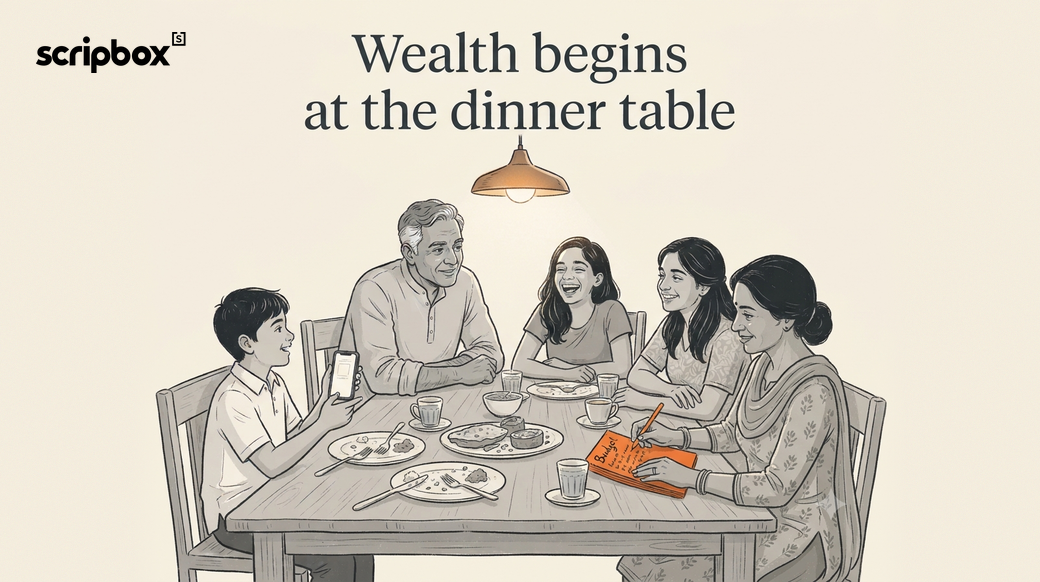
Spending, in a family, is done by many hands, so the plan should be made by them too. When everyone has had a say in what matters, nobody needs policing. At the same time, children who sit at that table learn something about money that no school will teach them.
So here is my suggestion. Pick an evening before the new year, gather the family, and give everyone a job. You can call it budget night.
Budget night
Hand the children the subscriptions and ask them to find every app, streaming service and membership the family pays for, and which ones anybody actually used this year. Offer a finder’s fee of half of whatever they help you cancel. You will be amazed how thorough a twelve-year-old becomes when there is a bonus involved.
The grown-ups take on the harder questions, starting with the one my daughters’ budgets answered. Did our savings rise when our income did, or did the raises just turn into lifestyle? How much of what we spend is now fixed and hard to undo? Which treats from three years ago have become routine? If our income stopped tomorrow, how long could we carry on as we are?
Finally, ask everyone to name one thing they would not compromise on no matter what, and one thing they could happily live without.
Nobody needs to squint at a spreadsheet any more. A budgeting app or an AI assistant can sort a year of statements in minutes. Just be careful what you share with them.
Save first, then a buffer, then enjoy
My co-founder Sanjiv has a rule I have always liked for its simplicity. Once you have saved for your goals, what you do with the rest isn’t nearly as important.
In a year like this, I would add one step. Save for your goals, set aside a buffer that covers your non-negotiables for the next two or three years, and then spend the rest freely. A budget is permission to enjoy everything else without guilt, not just a list of things we can’t have.
So, to those who asked what they can do, this is it. Let the portfolio do its work, and do yours at the dinner table.
I’ll leave you with a question. If next year turns out to be a tough one, which expense will your family be glad it trimmed?
With warm regards,
Atul Shinghal
CEO and Founder,
Scripbox
P.S. After your budget night, if you would like to check whether your buffer covers what your family cannot compromise on, we are here to go through it with you.



 Google Play
 App Store

Show comments