



Dear Reader,
I want to begin with what you already know.
The Sensex and the Nifty have fallen over 7% in recent weeks. Oil prices are elevated. The conflict in the Persian Gulf is ongoing and perhaps heating up more. As you watch the news, or look at your portfolio, it is natural to feel unsettled. I am not going to tell you otherwise.
What I do want to offer is something more useful than reassurance: an honest account of what we believe is happening, what it means for your wealth, and precisely what we are watching.
What is actually driving this
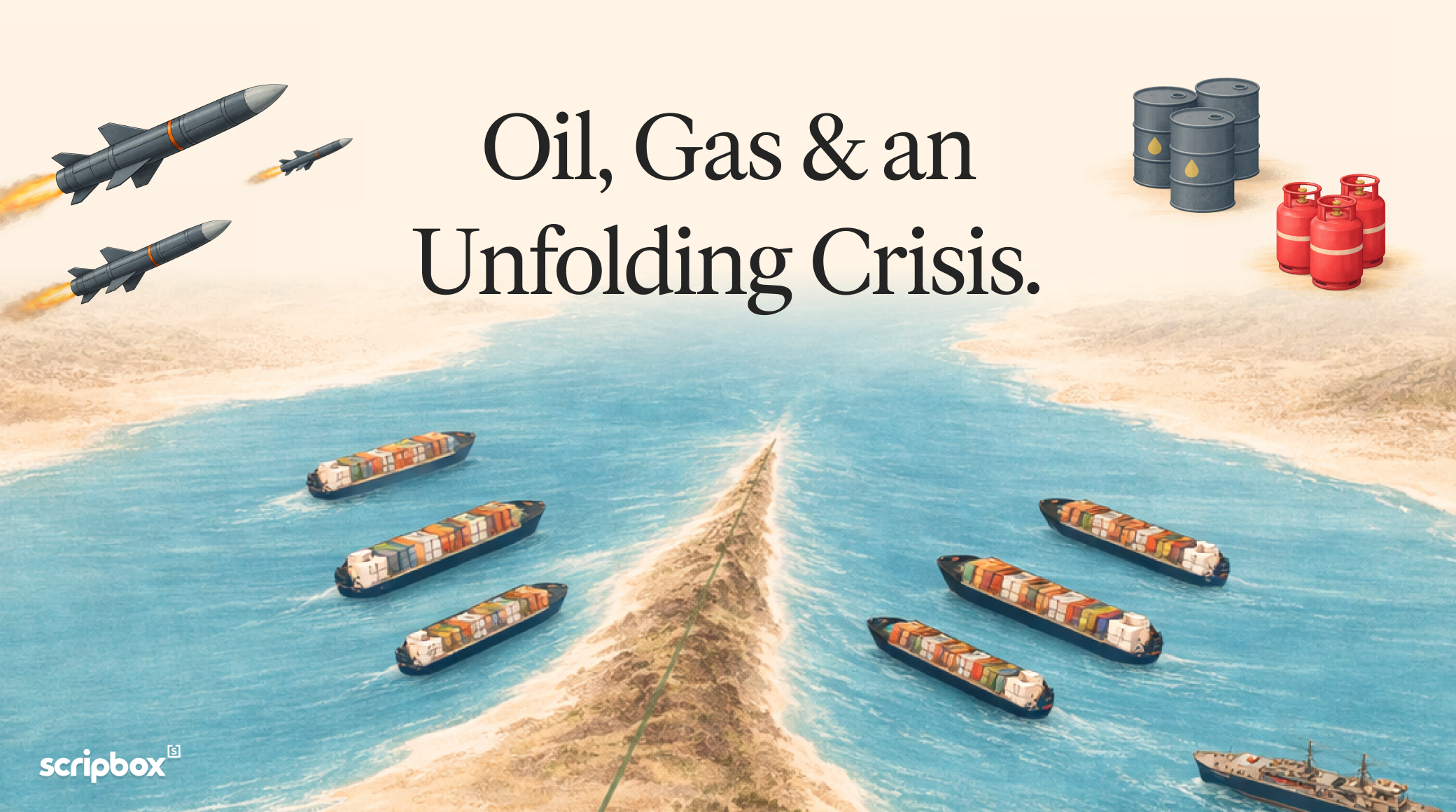
The conflict involving the US, Israel, Iran, and several Gulf nations has pushed global oil prices sharply higher. India imports nearly 88% of its oil and about 60% of its LPG, so the impact is not just hypothetical.
Higher crude means higher fuel and transport costs, which feeds into broader inflation. It also raises the possibility that the RBI delays interest rate cuts, which affects borrowing costs and rate-sensitive parts of the market.
Add to this the pattern of global investors pulling money out of emerging markets like India when geopolitical anxiety rises, and you have the conditions for exactly the kind of short-term equity volatility we are currently experiencing.
None of this is surprising. And that matters more than it might seem.
Why this pattern is familiar and what history tells us
Geopolitical shocks follow a pattern that history has repeated enough times to trust: oil spikes, markets sell off, investors panic and then, typically within 12 to 18 months, markets recover, often strongly. The investors who consistently come out worse are not the ones who held. They are the ones who exited at the bottom and missed what came next.
India is also meaningfully better positioned today than in previous crises. We have diversified our oil suppliers considerably to Russia, the UAE, and Iraq among others. Our foreign exchange reserves remain at strong levels. These are not trivial buffers.
What we are watching, and why we are telling you
I want to be transparent about how we are thinking about this, because I believe you deserve to know what would actually change our approach, not just hear that everything is under control.
There are three specific indicators our team is monitoring closely.
- Crude oil prices: Brent crude sustained above approximately $100–120 per barrel is the threshold at which inflation risk becomes serious and starts to meaningfully affect portfolio conditions. We are not there yet, but it is what we are watching.
- The rupee: Normal currency fluctuation of 3–4% is manageable and expected. A depreciation significantly beyond that range would signal broader stress in the current account and import-dependent sectors.
- Equity market levels: A correction beyond 15% from recent peaks would prompt us to initiate individual conversations about specific portfolio actions. At the current levels, we are in correction territory, not crisis territory.
As of the time of my writing this letter, none of these thresholds have been crossed. If any of them are, we will reach out to you directly. You will not have to wonder.
What your portfolio is designed for
This is the part I most want you to hold onto.
The asset allocation we built together, the balance between equity, debt, and gold, set to your goals and your time horizon, was designed with exactly this kind of environment in mind. Volatility is not a threat to a well-structured portfolio. It is an expected condition that the plan already accounts for.
If you are investing through a monthly SIP, this environment is quietly working in your favour. You are buying more units at lower prices. That is not a loss. That is the strategy doing precisely what it is supposed to do.
Your debt funds and gold holdings are providing stability right now while equity markets find their footing. The structure is holding. This is what it looks like when a plan works.
My honest recommendation
No one can know how long the uncertainty will last. The decisions most people regret in a period like this are the ones made under pressure. It’s moving to cash, pausing SIPs, exiting equity positions because the headlines feel frightening. These actions feel like control. Historically, they tend to work against the very goals they’re trying to protect.
Stay invested. Hold your allocation. If you feel the urge to make a change, speak with us first. That conversation takes 15 minutes. The compounding it protects could be worth years.
We are watching this carefully so you don’t have to watch it anxiously. That is our job, and we take it seriously.
Warm regards,
Atul Shinghal
CEO and Founder, Scripbox
P.S. If you have questions, concerns, or simply want to talk through what you’re seeing in your portfolio, please reach out. These are exactly the conversations we exist to have. We are here.
Confused if your portfolio is performing right enough to meet your goals?










 Google Play
  App Store
Show comments