



Dear Investor,
We understand what many of you are experiencing. Whether it is your own portfolio or the news, you have felt the impact.
Indian stock markets have been under pressure for months now. The rupee has weakened against the dollar and FIIs have been selling in Indian markets consistently now. The story being told all over social media and even mainstream media makes it seems like the India story is coming apart.
We understand why that story feels true. When markets fall week on week, all of it visible and amplified through loud headlines, it is natural to feel something deep must be broken.
We hear this concern from clients often, and we take it seriously. So looking beyond share prices, we went back to look at what the economy itself is doing. We found that the short answer is that economic activity is holding up, even as risks have risen.
The economy is still growing despite the doom and gloom narrative
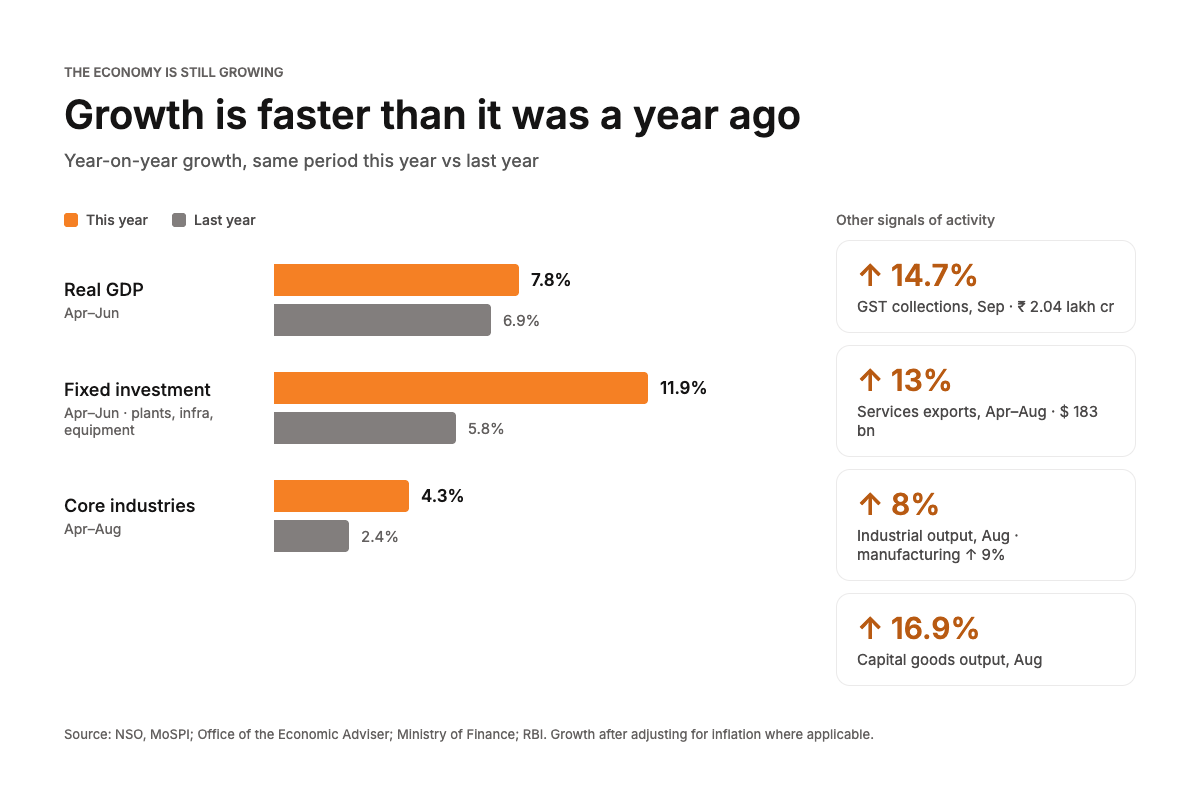
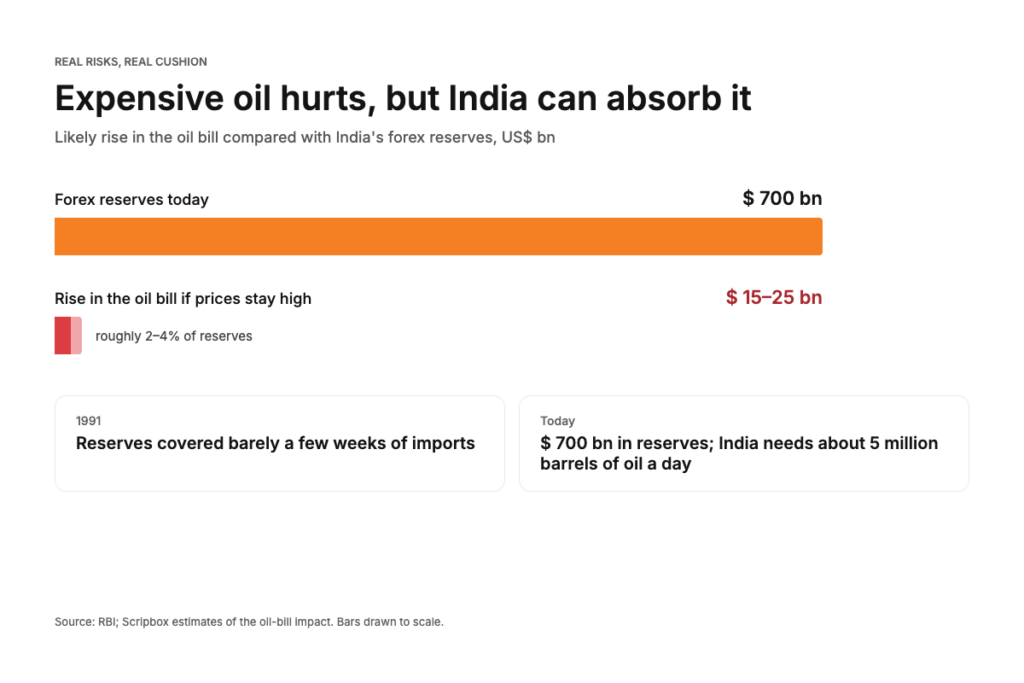
Between April and June of this year, India’s economy grew 7.8% after adjusting for inflation compared to 6.9% last year. Before the adjustment, growth was at 10.3%. This second number is actually closer to what companies see in their sales and what the government collects in taxes.
The RBI is aware of this as well and raised its growth forecast for the year from 6.7% to 7.1%.
Factories are busier
Industrial output grew 8% in August compared to 7.4% in July while manufacturing grew 9%. Output of capital goods rose 16.9%. Capital goods are the tools, machinery and assets businesses use to make other goods. Output from India’s core industries grew 4.3% between April and August, up from 2.4% for the same period last year. Factories are not sitting still, based on this data.
Investment is still growing
Fixed investments by Indian companies, specifically on buildings, infrastructure and equipment, grew by 11.9% between April and June, compared to 5.8% in the same months last year. If companies are spending more on new plants and equipment, they are expecting more demand in the years ahead. This is again a positive, though we will keep a watch on the pace of this.
Trade and commerce are still moving
GST collections reached ₹2.04 lakh cr in September. This is 14.7% higher than last year. Domestic collection, or GST collected on sales within India, leaving out imports, rose 10.1%. This is a useful sign of activity.
Yes, GST collections can be influenced by prices going up, timing, changes in taxation, or imports. But if we see this alongside data around production and sales, it tells us that formal economic activity, something in which most of us participate, remains healthy.
India is still earning from the world
Services exports such as software, consulting, and back office work rose about 13% to $ 183 billion between April and August this year. India’s surplus on services grew to about $87 billion, up from $80 billion last year. This income helps the country at a time when oil is expensive and the rupee is under pressure.
The economy in the last two years
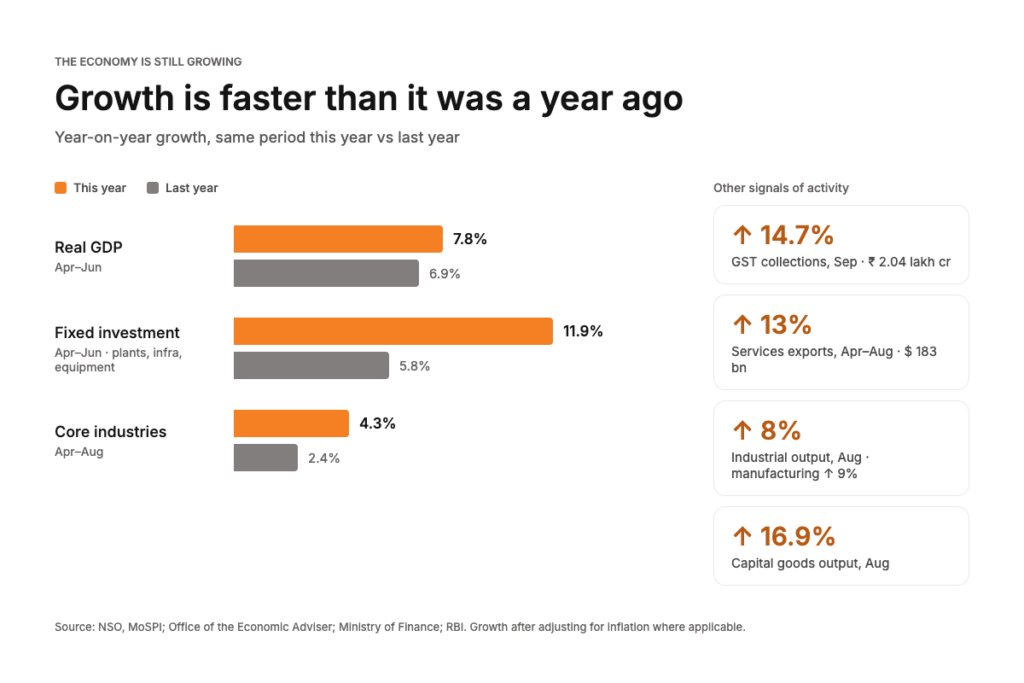
We can’t ignore the last two years. Growth, once adjusted for inflation, held at roughly 7%. However, households held back on spending, and company sales and profits grew more slowly because of that. It’s one factor that explains why markets have struggled.
At the same time, Income tax and GST cuts in 2025 left more money with households. Rate cuts also added money to the banking system. Compare this to the pre-COVID period when we saw real GDP growth slowing for three consecutive financial years, from 8.3% in FY2016-17 to 6.8%, 6.5% and then 3.9% in FY2019-20.
Yes, there are real risks and concerns
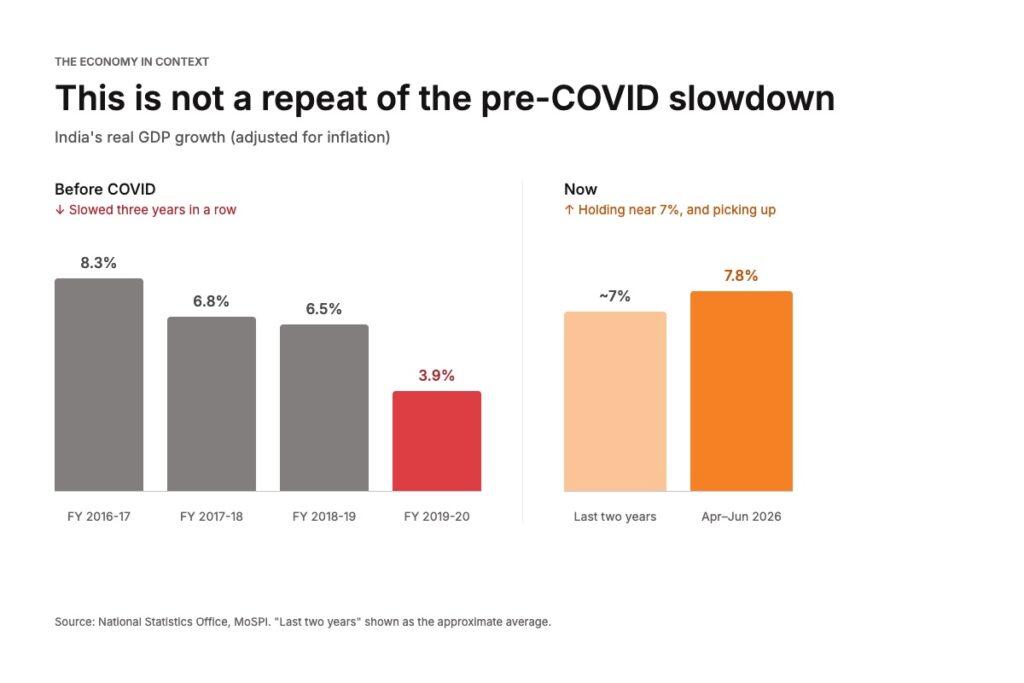
Expensive oil is a serious challenge. India needs roughly 5 million barrels of oil each day and if the prices stay high the oil bill rises by billions of dollars. This can push up inflation, weaken the rupee, and affect companies.
At the same time, India is better placed to absorb this than in 1991, when we had barely enough to cover just a few weeks of imports. Forex reserves are at $700 billion today. An increase of $15-25 can be managed.
The RBI also raised rates to 5.5% on October 7th. This was in response to inflation concerns as the RBI increased its inflation forecast to 5.2% for FY 27.
Coming to FII selling, higher interest rates in the US have pulled some foreign money out of markets like India. This affects both share prices and the rupee. But most of India’s investments are paid for by Indians’ own savings. Foreign selling won’t stop factories, roads, and homes from being built.
Simply put, a share’s price equals the company’s earnings multiplied by what investors will pay for each rupee of those earnings. FII selling affects what investors will pay. Earnings depend on the business itself. If that grows, they can make up for foreign selling over time.
That’s why the real question that should matter to investors is can companies grow their earnings over the next 3-5 years. Is the price reasonable for that growth and are the businesses financially alright?
Our thinking, and two suggestions for you
Falling share prices and a breaking economy are two very different things. Right now the data only tells us that share prices are falling. India is still producing, investing, selling, exporting, even as the markets go through a difficult phase. External pressure may slow progress and create volatile conditions but they do not automatically derail the long term economic story.
We do understand if you are feeling uneasy. It’s understandable when markets fall the way they have. The response though is neither panic nor complacency. We are watching the risks, inflation, focusing on earnings and valuations, and recommend staying invested in line with your long term financial plan.
Two things you can do now:
- Maintain your strategic asset allocation.
- Avoid making large changes to your portfolio based solely on crude oil movements, FII selling, or short term predictions.
We encourage you to reach out to us if we can help you revise your plan, if needed.
– From the Scripbox Research Desk
Data sources: National Statistics Office, MoSPI (GDP, April to June 2026; Index of Industrial Production, August 2026); Office of the Economic Adviser, Ministry of Commerce and Industry (Index of Eight Core Industries, August 2026); Ministry of Finance (GST collections, September 2026); RBI (services trade estimates, April to August 2026; Monetary Policy Statement, October 2026).




 Google Play
  App Store
Show comments